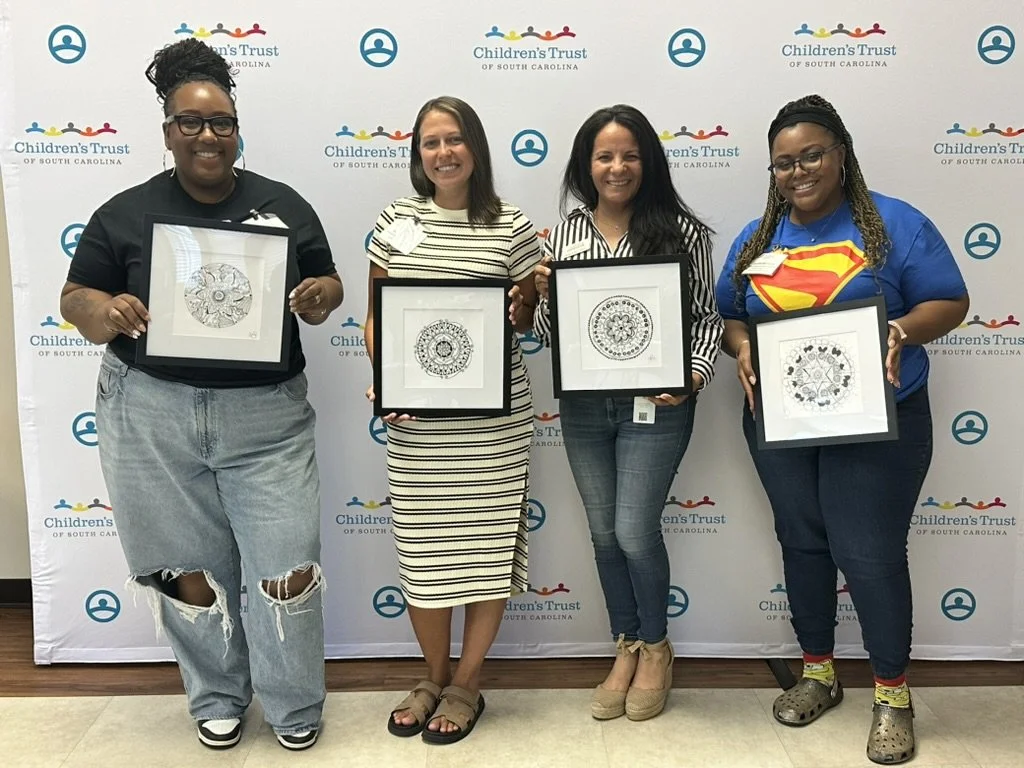
Mandala Drawing for Resilience: Children’s Trust of South Carolina
Building Resilience: The Neuroscience of Creativity as a Protective Factor
In Summer 2025, Children's Trust of South Carolina brought Sumac Arts in to work with directors of Family Resource Centers across South Carolina, organizational leaders whose work supports children and families navigating trauma, abuse, and chronic adversity.
This engagement examined the role of structured creative practice as a potential protective factor in trauma-informed settings. Grounded in current findings from neuroscience, the session explored how focused creative activities may activate neural pathways associated with emotional regulation, cognitive flexibility, and stress recovery.
Recent research in neuroplasticity and affective neuroscience suggests that psychological resilience and creativity share overlapping neural mechanisms. Drawing on this body of work, economist and stress management specialist Sudha McFadden presented an overview of how structured creative engagement can help mitigate some of the neurological impacts associated with adverse childhood experiences (ACEs).
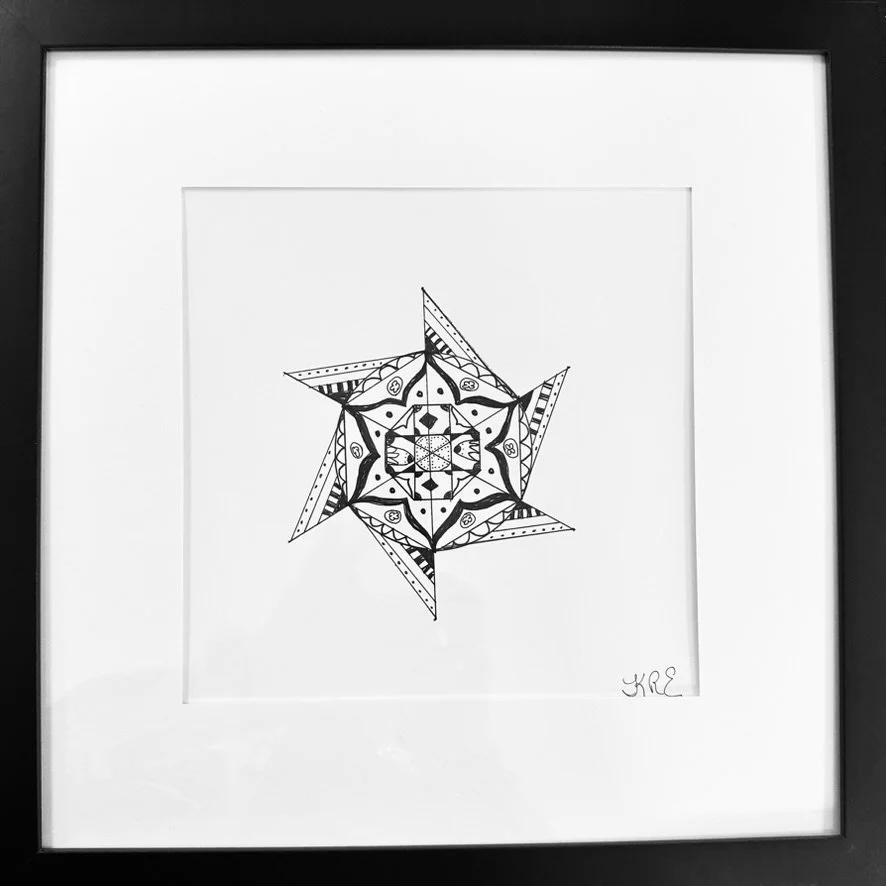
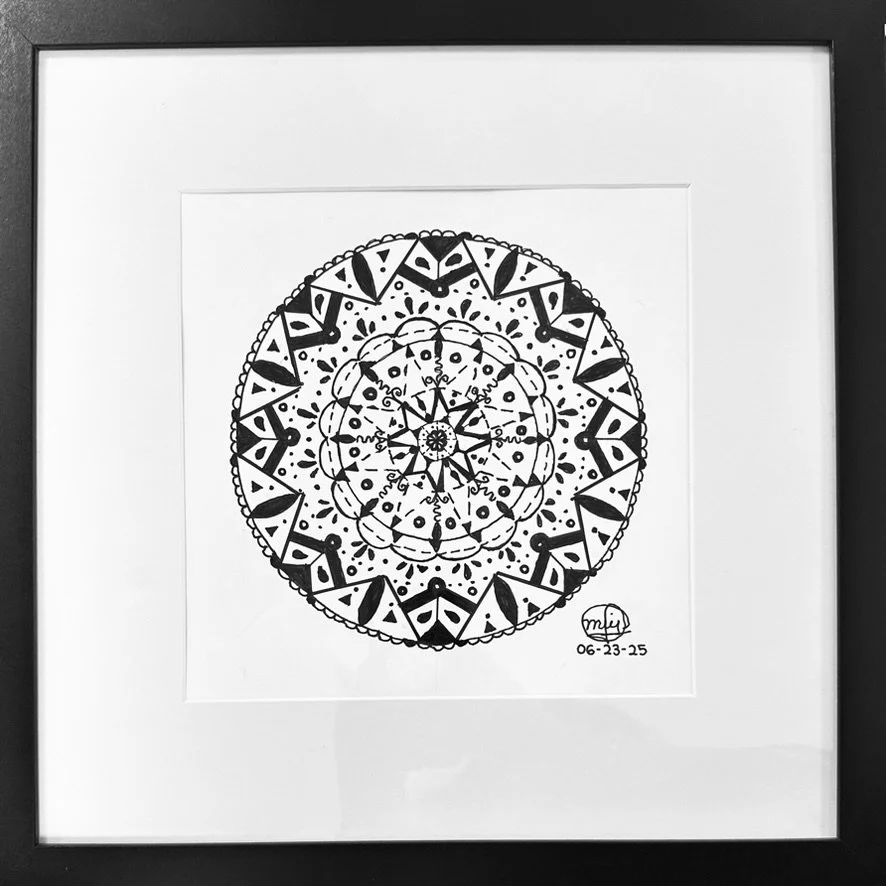
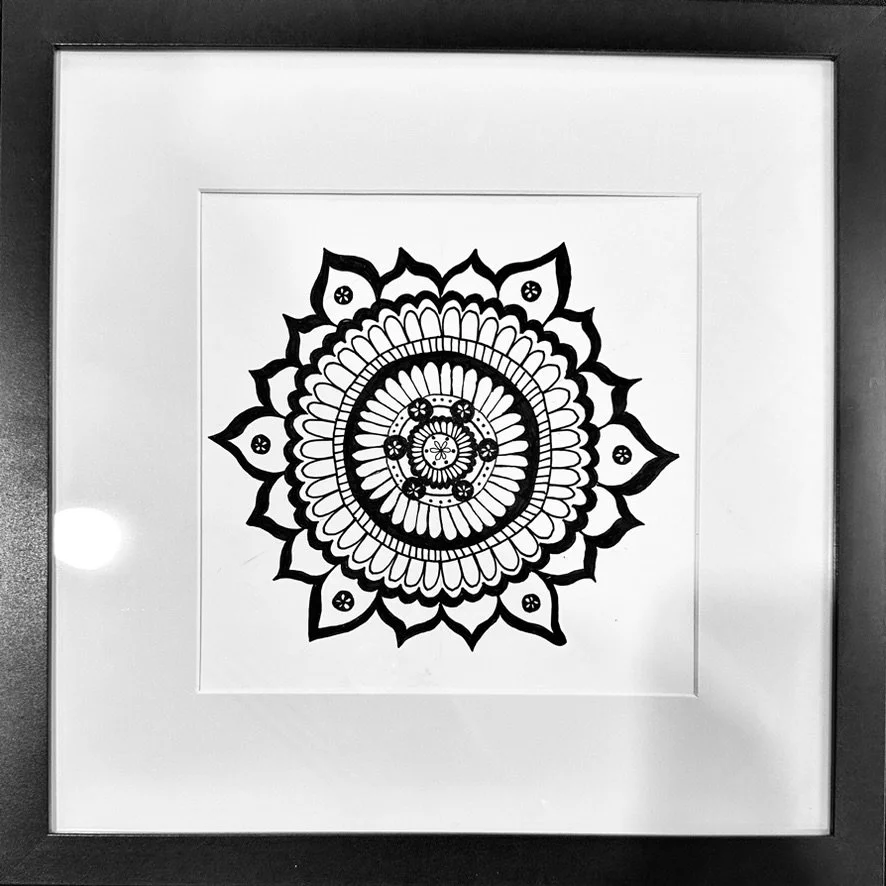
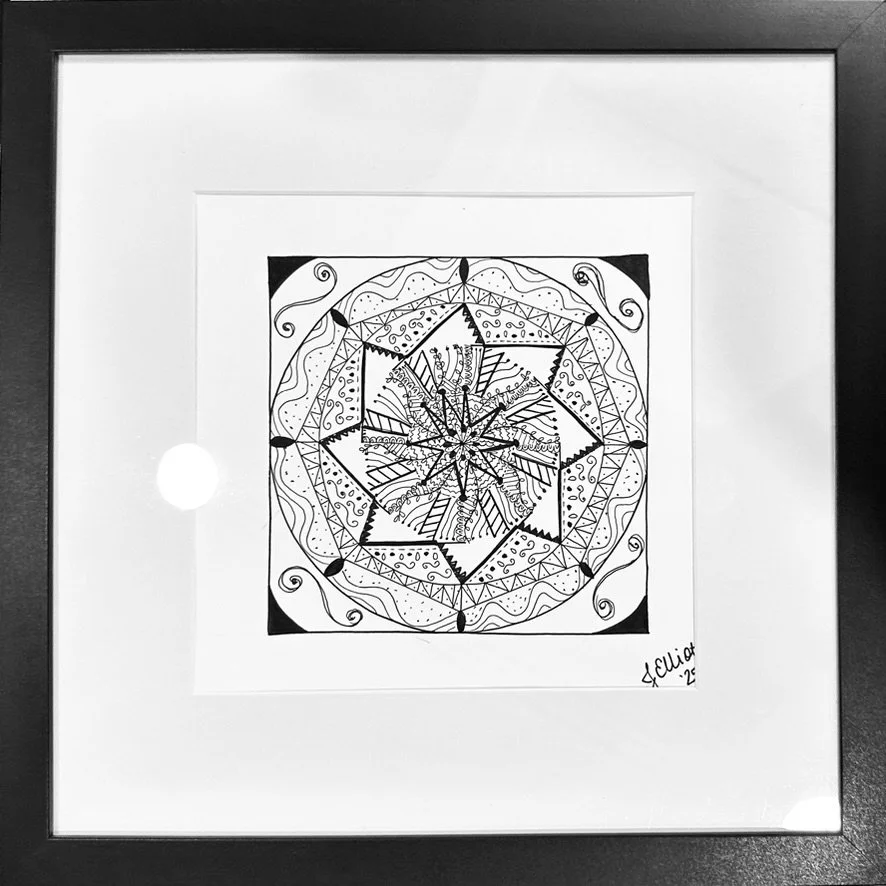
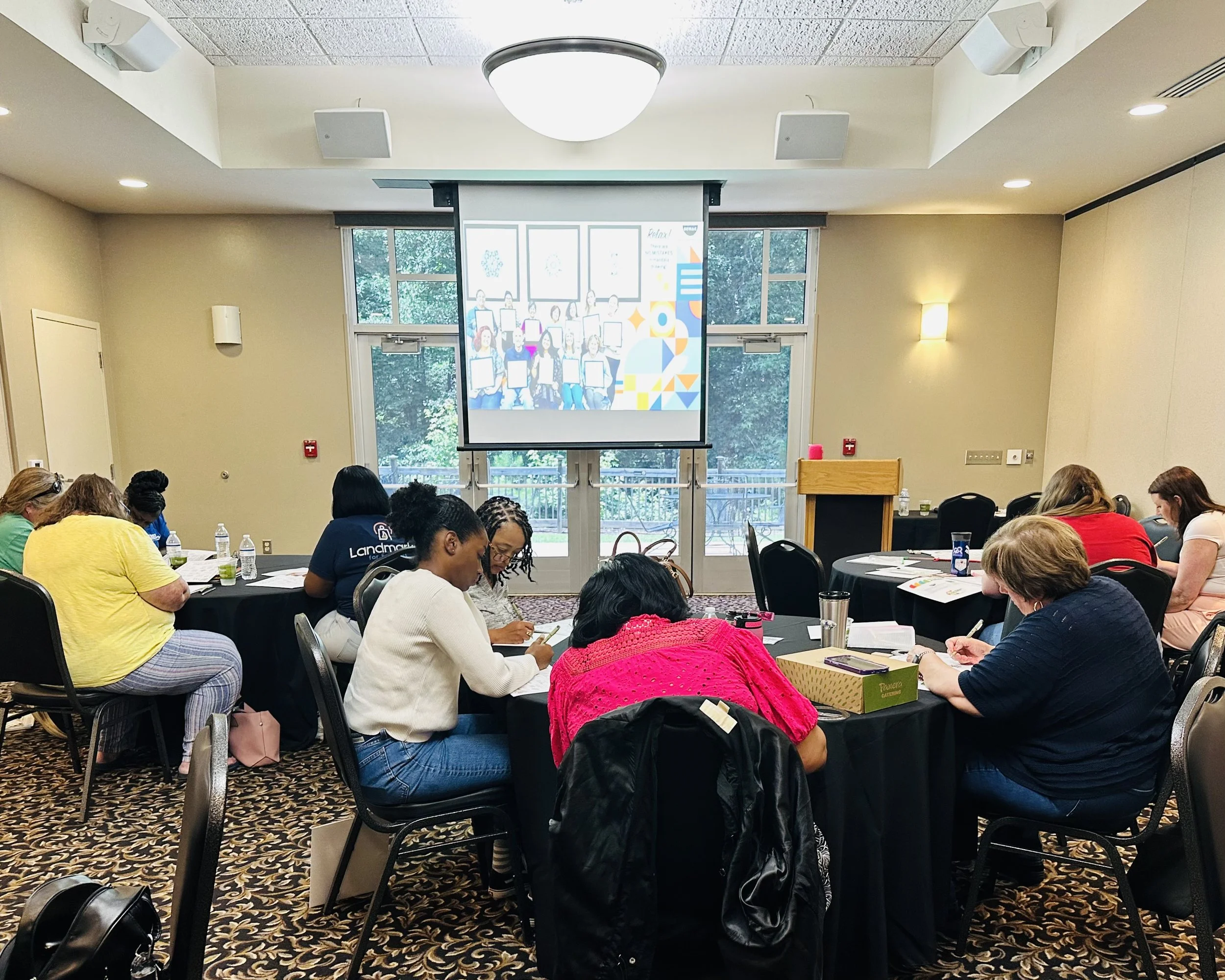
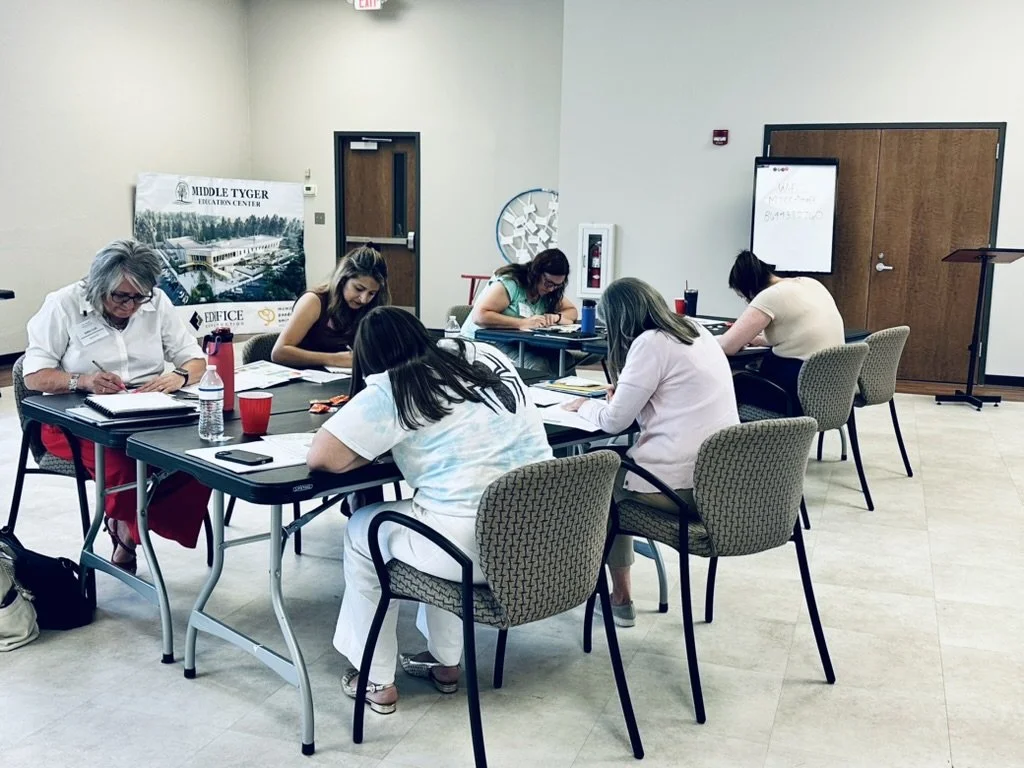
The session combined a research-based presentation with a guided experiential component. The opening talk introduced participants to relevant findings on attention, flow states, and the role of structured repetition in supporting regulatory processes in the brain. This theoretical framework was followed by a facilitated mandala drawing exercise designed to translate these principles into a tangible practice that participants could incorporate into both personal stress recovery and professional contexts.
The engagement was delivered across three locations in Columbia, Lyman, and Florence, and served 46 leaders and social work professionals from across South Carolina. The program was designed to support practitioners working in trauma-informed environments, offering both conceptual grounding and an accessible creative practice that can be integrated into daily routines for nervous system regulation and resilience-building.
Outcomes and Participant Feedback
Feedback was collected anonymously at the close of each session.
Overall responses were strongly positive. Ninety-five percent of participants indicated that they would recommend the session to a colleague; no respondents selected “no.” In addition, 52% reported leaving the session with a creative practice they intended to continue independently.
Qualitative responses suggested that the experience supported immediate shifts in participants’ perceived state of regulation and attention. Many described feeling relaxed, grounded, and more connected to themselves following the creative exercise. Notably, several participants expressed initial skepticism about their own creative ability but reported that the structured nature of the practice made the activity accessible and engaging.
Participant Reflections
“I found this to be extremely relaxing, which I haven't felt in a very long time.”
“I cannot draw and expected this exercise to be painful. I LOVED IT. I honestly lost myself in the drawing and kept feeling more inspired. I let the drawing lead me.”
“It was nice to see how one small dot, line, design put together and repeated can make a design. Mandalas look so intricate but at the end you notice they are not — they are just a continuous work, just like us.”
“Great idea — brain food before creative experience. Will use this model for future parent-child sessions.”
Several participants also inquired about bringing similar sessions to their own teams and organizations, suggesting that the format resonated with professionals seeking practical tools for stress regulation and resilience within their work environments.